
Introduction
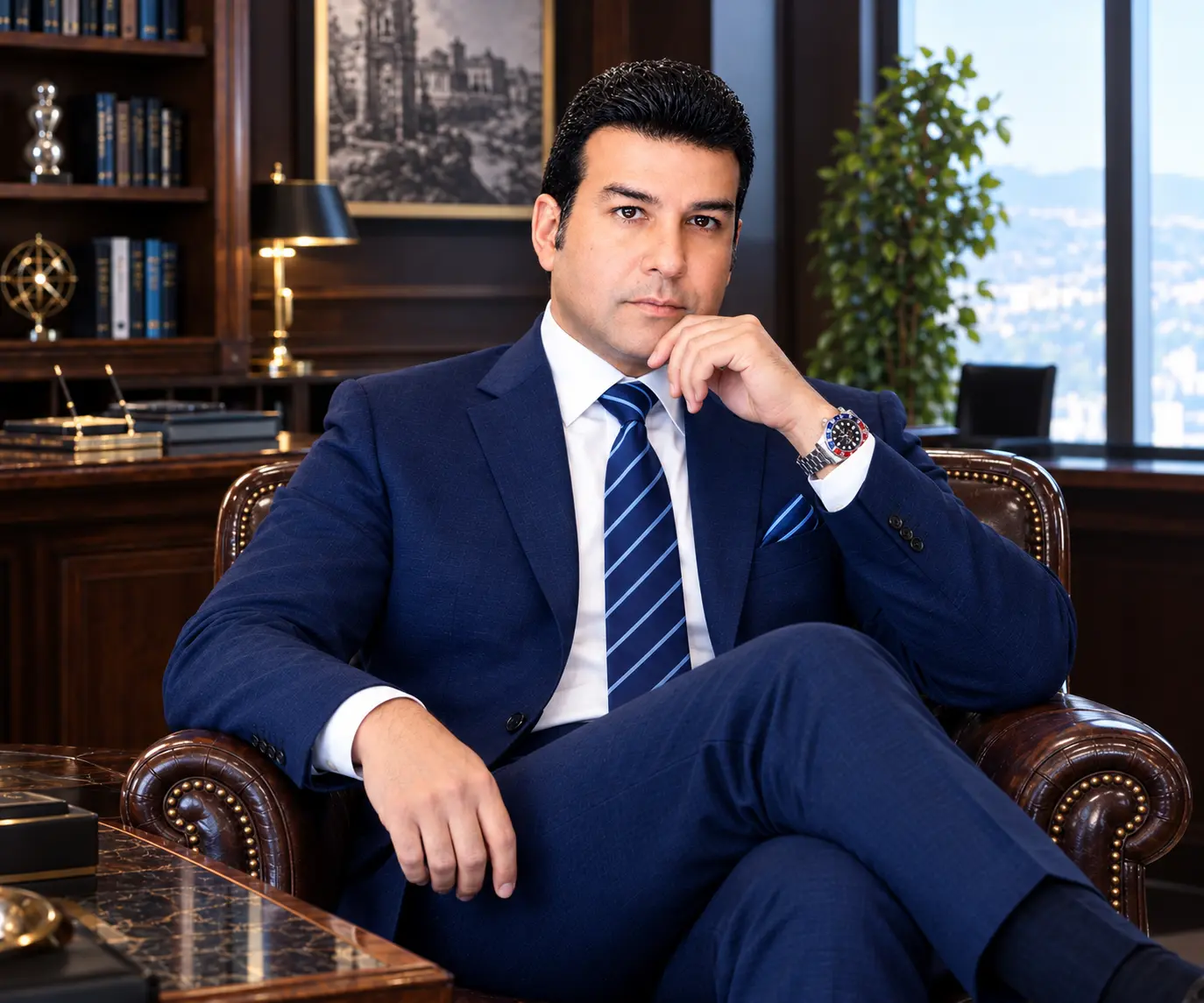
Ramzi Najjar is an independent systems theorist, author, and the founder of Post-Performance Philosophy (PPP). His work examines the precise relationship between human behavior, performance, perception, capacity, resistance, and structural change. He is the originator of the Law of Alignment, a developing transdisciplinary framework concerned with how complex systems accumulate underlying pressure, lose adaptive capacity, and either restore alignment or enter structural decline. Today, his research sits cleanly at the intersection of philosophy, systems thinking, human behavior, and mathematical formalization.
The Early Observations
The Observational Shift
The origins of this research program trace back to observations made during the Lebanese Civil War. As a young observer of prolonged conflict, Najjar became interested in a fundamental question: why can people exposed to comparable external conditions experience radically different long-term outcomes? That question remained central to his thinking for decades and eventually developed into a broader investigation of the relationship between external conditions, internal processing, capacity, and behavioral persistence.
Over approximately three decades, Najjar continued recording and examining observations concerning human behavior, operational pressure, adaptation, resistance, and the effects of sustained environmental demands.
The Lockdown Catalyst & Literary Foundation
The Nine-book Synthesis
During the COVID-19 lockdowns, Najjar utilized the sudden interruption of ordinary life to consolidate his three decades of empirical notes and field observations. This intensive period of monastic isolation allowed him to structure a lifetime of research into a comprehensive, nine-book body of work that became the literary foundation of Post-Performance Philosophy.
This extensive philosophical arc was deliberately designed to move from foundational questions of consciousness and human perception toward psychology, environmental resilience, ego, performance, and ultimately the total cessation of performance itself. Rather than offering conventional self-help, this foundational literature established the structural baseline of his framework: proving that human performance lacking internal structural alignment inevitably generates systemic instability.
Expansion of the Framework
From Individual to System
His subsequent research extended beyond philosophical prose into systems theory, cybernetics, mathematical modeling, and nonlinear dynamics. The Law of Alignment was progressively formalized through a series of research monographs and technical studies addressing structural drift, capacity depletion, accumulation, resistance, dissemination, and alignment across different types of systems.
The framework has been developed as an open subject for examination, mathematical analysis, computational testing, empirical investigation, extension, and falsification. Related research records have been deposited with persistent DOIs through Zenodo and indexed across academic research platforms, including PhilPapers and Academia.edu.
Toward the Law of Alignment
Methodological Convergence
His work sits precisely at the intersection of philosophy, systems thinking, human behavior, and mathematical formalization, with the Law of Alignment serving as the central framework connecting the different stages of the research. Rather than presenting Post-Performance Philosophy as a finished doctrine, Najjar continues to develop the underlying framework through formal specification, mathematical modeling, and interdisciplinary research across structural systems.
His work remains deliberately independent of conventional institutional structures. The framework operates as a cross-domain structural principle, inviting advanced thinkers and complexity scientists to utilize its formal parameters for open examination, computational integration, and empirical falsification.
Current Work
Ongoing Research
Today, Najjar’s work sits precisely at the intersection of philosophy, systems thinking, human behavior, and mathematical formalization, with the Law of Alignment serving as the central framework connecting the different stages of the research. Rather than presenting Post-Performance Philosophy as a finished doctrine, Najjar continues to develop the underlying framework through formal specification, mathematical modeling, and interdisciplinary research.
His work is deliberately independent of conventional institutional structures. The framework continues to be developed as an open subject for examination, mathematical analysis, computational testing, empirical investigation, extension, and falsification across multiple domains.
© 2020–2026 The Law of Alignment®. All Rights Reserved.